Charging iPhone 18 Pro over USB-C
USB‑C provides fast charging on iPhone 18 Pro and also supports USB 3 data transfer up to 10Gb/s.
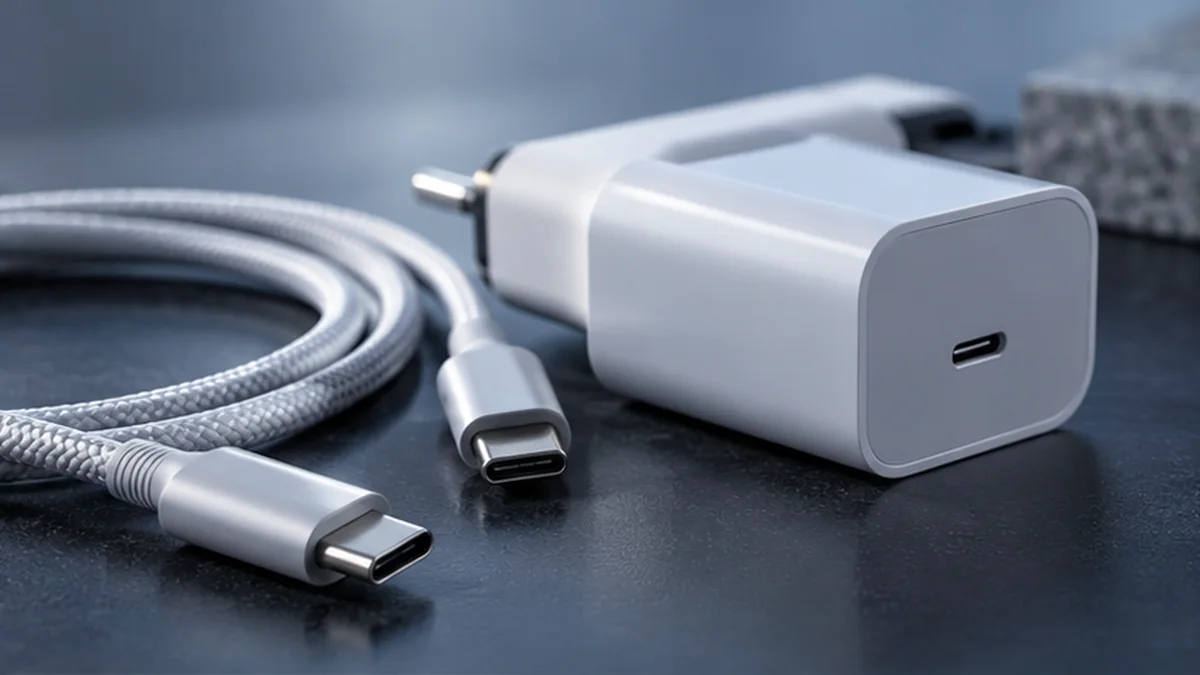
Quick answer: which USB-C charger suits iPhone 18 Pro?
According to the manufacturer figures cited below, iPhone 18 Pro can reach up to 50% charge in roughly 15 minutes under defined conditions with a 60W-capable USB-C adapter or higher, suitable adjustable-voltage power delivery and a compatible cable. A label showing 60W alone does not guarantee the result: the negotiated power profile, battery level, temperature and concurrent phone use all matter.
- Charging only: Check USB-C Power Delivery or the charging profile Apple specifies; do not simply buy the largest adapter.
- Large file transfers too: For USB 3 up to 10Gb/s choose a cable specified for that data rate; do not rely on the connector shape alone.
- Multi-port adapter: The output available at a single port can drop when a second device charges at the same time.
- Heat and usage profile: Peak figures are not a guaranteed average up to 100 percent.
Source: Apple – iPhone 18 Pro technical specifications. This guide compares requirements; it contains no charging times we measured ourselves and no paid purchase recommendations.
Fast charging
Apple specifies up to 50 percent in about 15 minutes with a 60W-capable adapter or higher and suitable adjustable-voltage power delivery.
USB 3 for large files
The USB‑C port supports USB 3 up to 10Gb/s, which is especially useful for large photo and video files.
Charging power and data speed are different specifications
USB-C is a connector shape, not a guarantee that every cable transfers data at the same speed. A cable designed for high-wattage charging may still support only slower data transfer. Conversely, an expensive high-speed data cable does not inherently make charging faster when your existing cable already meets the required power rating.
- Adapter: verify USB-C Power Delivery support and the appropriate output.
- Cable: look separately at its supported charging power and data standard.
- Multi-port charger: compare the per-port limits with total shared output.
- Charging comparison: use similar battery levels and temperatures rather than isolated peak claims.
Why real-world charging speed changes
The maximum charging rate is not sustained from empty to full. Battery level, heat and concurrent device use can affect the power the phone accepts. Fast partial-charge figures only apply under the conditions stated by the manufacturer. For overnight charging, dependable quality and appropriate protection are more meaningful than chasing the largest wattage printed on a box.
If you frequently move large videos to a computer or external drive, data-transfer capability matters separately. Choose a cable explicitly rated for the required USB data standard: two visually identical USB-C cables can perform very differently for file transfers.
Before buying USB-C accessories: check the whole chain
USB-C primarily describes the connector. Actual charging power and data features also depend on the adapter, cable, device and negotiated protocol. A very high-wattage charger therefore does not automatically charge a phone faster. Compare verified manufacturer specifications rather than just the number printed on the packaging.
- Adapter: Check the supported USB Power Delivery profiles. A correctly specified, well-made charger is more useful than an unsupported universal fast-charging promise.
- Cable: Length, physical quality and documented charging or data capabilities matter more than a generic USB-C label.
- Daily use: Monitor temperature and behaviour during normal use. Hot environments or demanding tasks may affect charging.
If you use your phone at a desk, in a car and when travelling, evaluate each combination of adapter, cable and accessory. Apple’s linked technical specifications provide the starting point; comparable charging-speed claims still require controlled measurements.
USB-C connector, charging and transfer speeds are separate specifications
USB-C describes the connector, not a guaranteed charging wattage or data rate. Apple documents faster USB 3 transfers on supported Pro models when a suitable additional USB 3 cable is used. Charging relies on a compatible USB-C Power Delivery supply. When selecting accessories, verify the charger’s actual output profiles, the cable’s rated capabilities and the device requirements independently. More watts on the label alone do not prove that the phone will draw that power.
Verifiable source: Apple Support: connect and charge iPhone over USB-C